The Builder's Chair: Maximilian Fischer on Building Factory AI That Works Councils Actually Trust
By Critical Ventures
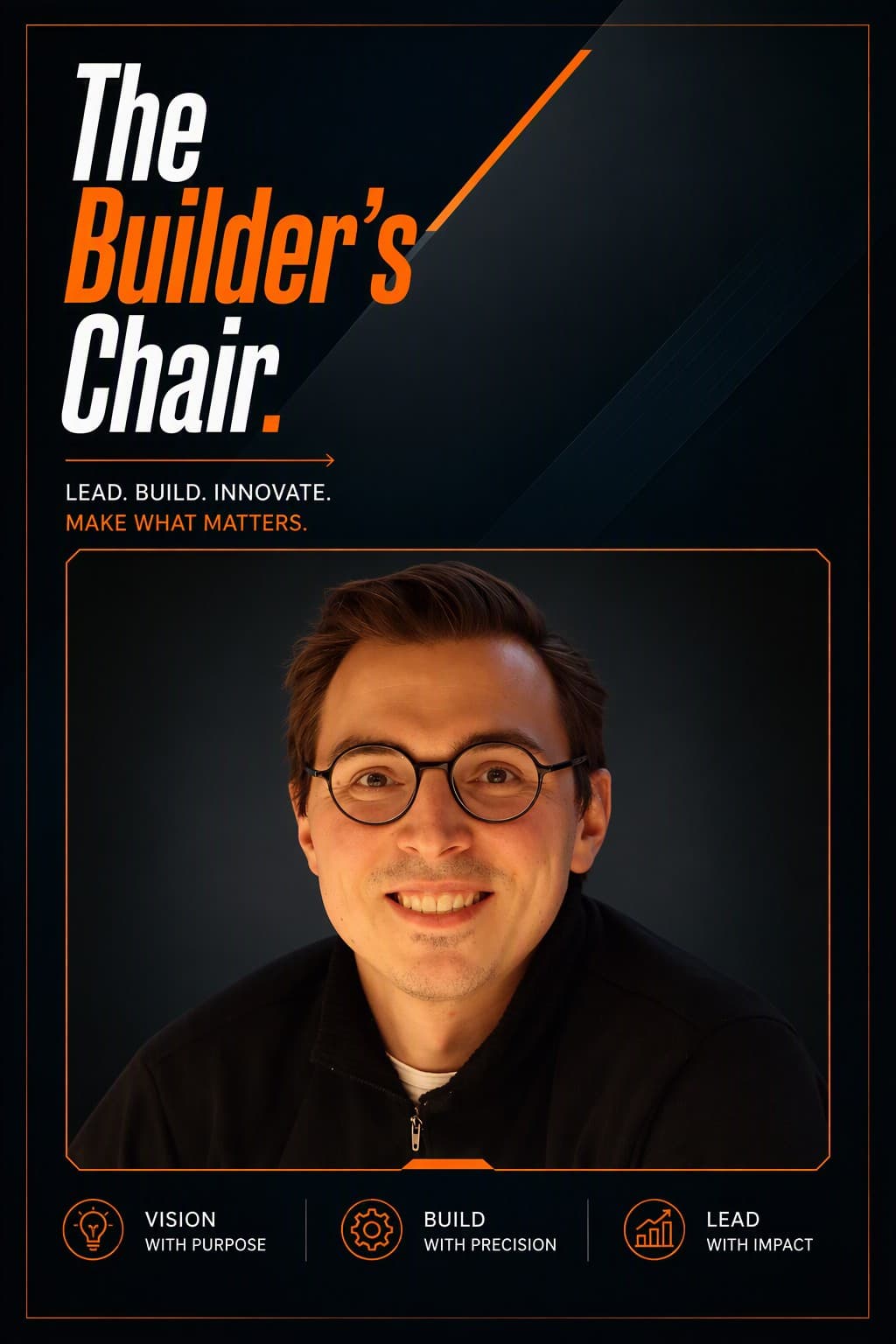
The Builder's Chair is Critical Ventures' founder interview series — conversations with the people building the companies in our portfolio. We go deep on the decisions that shaped the business, the hard years that didn't make the press release, and the bets they're making on the future of their industry.
Almetra is a Berlin-based manufacturing-intelligence company founded in 2022 at the Merantix AI Campus by Maximilian Fischer (CEO) and Silviu Homoceanu (CTO). Its platform uses AI-powered cameras over production lines to turn shopfloor activity into structured, real-time data — cycle times, output rates, utilization — without requiring sensors, manual time studies, or IT integration, while processing footage locally and anonymizing it so no individual worker performance is tracked.
In June 2026, Almetra closed a €16 million Series A led by transatlantic investor Blisce, with participation from NAP, Merantix, Robin Capital, Underline Ventures, and Critical Ventures, bringing total funding to roughly €25 million; the round is earmarked for US expansion and building toward automation and robotics, including acceptance into Google DeepMind's Robotics Accelerator and the AWS/Nvidia/MassRobotics Physical AI Fellowship.
Critical Ventures backed Almetra because it brings AI to the part of the business most software ignores — the physical shop floor — where value is hardest to capture but compounds the most once it's embedded in how a line actually runs.
Before co-founding the company with Silviu Homoceanu in 2022, Maximilian spent eight years as co-founder and CEO of Actyx, a Munich-based company building software to digitize and automate factory processes, making Almetra his second run at factory software, not his first. Earlier, at ETH Zürich, he worked as a research assistant in physical chemistry and as a teaching assistant in quantum mechanics, while also co-founding HackZurich, Switzerland's largest hackathon.
Read our full investment thesis here.
You've written that Almetra's first customers didn't come from a warm intro or a fancy dinner — they came from you personally messaging more than a hundred factory workers on LinkedIn. What's the most memorable reply you got from one of those cold messages?
I wouldn't say there was one particular reply that stood out. What surprised us most was actually how many people responded in the first place.
We were reaching out to plant managers and manufacturing leaders who are generally incredibly busy, so seeing so many of them willing to take the time to respond and have a conversation was really encouraging.
For us, that was another strong signal that we were solving a very real problem, and it gave us the confidence that we were moving in the right direction.
You lead strategy and product while Silviu leads engineering. What's the most memorable disagreement the two of you have had about how to build Almetra — and who turned out to be right?
I wouldn't say we have many disagreements. Of course, there are always difficult decisions to make when you're building a company, and Silviu and I often bring different perspectives to those decisions because we come from different backgrounds.
What has been much more important is that we support each other. Building a company comes with a lot of uncertainty, and you need to know that your co-founder is someone you can rely on, challenge ideas with, and ultimately make decisions together with.
We don't always start with exactly the same point of view, but we've become very good at using those differences to make better decisions as a team.
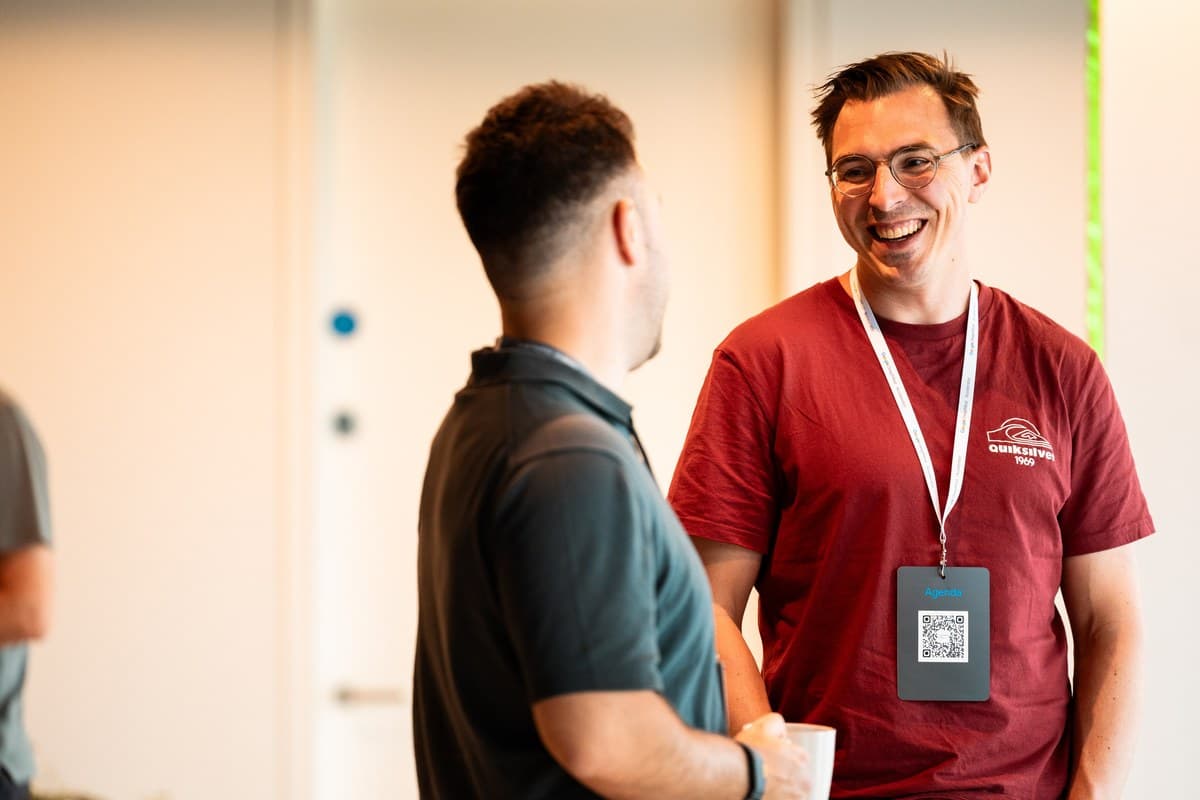
Your first-ever deployment in 2022 was one camera on one assembly line at a German electronics manufacturer. What do you remember most vividly about watching that first live data actually come in?
We actually signed our first customer before we even had a product. For us, that was a huge signal that the problem was real and gave us the confidence to push through and get that first camera deployed.
I remember there being a lot of excitement around seeing the first live data come in. The product was obviously much scrappier back then, but what stood out to me was that even in that very early version, the technology was able to focus on the process rather than the individual worker.
That was really important to us. We didn't want to build technology that asks, "What could this worker have done better?" We wanted to understand, "What is happening in this process, and how can we make it better?"
That principle has stayed with us ever since. The goal is to give people on the shop floor better information and better tools so they can do their jobs more effectively. The technology has changed enormously since that first deployment, but that philosophy really hasn't.
The new funding is earmarked partly for robotics and automation, and you've been accepted into Google DeepMind's Robotics Accelerator and the AWS/Nvidia/MassRobotics Physical AI Fellowship. What does "advanced automation" concretely mean for Almetra's roadmap over the next year?
We're incredibly excited about leaning further into robotics and automation, and getting accepted into the Google DeepMind Robotics Accelerator and the Physical AI Fellowship have been really encouraging signals for us.
But when we talk about advanced automation, we don't necessarily mean the fanciest technology. A humanoid robot is incredibly exciting, but does every manufacturing process actually need one? Often, the answer is no.
For us, advanced automation starts with having a really deep understanding of the process. Where are the bottlenecks? What should actually be automated? And what is the most efficient way to solve that specific problem? Once you understand that, you can apply the right technology rather than starting with the technology and looking for somewhere to put it.
I think that's especially important right now because it's very easy to get carried away by the flashy side of robotics and physical AI. But this isn't a branding exercise. Manufacturers around the world are dealing with very real labor shortages while at the same time trying to meet growing demand. Automation can be a real equalizer there.
So that's where we're putting our efforts: understanding processes incredibly well and then using that intelligence to help manufacturers automate the right things, in the right way.
Privacy is central to your pitch — raw video deleted immediately, no individual performance tracking, works council co-decision built in from day one. Has designing around that constraint ever slowed you down competitively, or has it turned into the thing that actually wins you enterprise customers like Bosch and ABB?
Fortunately, privacy has never been something we've had to add on top of an existing product. It has been part of how we've built Almetra from day one.
If we had built the technology first and then tried to retrofit privacy afterwards, I think it absolutely would have become a constraint and probably would have slowed us down significantly. Instead, it's part of the architecture of the product itself.
Of course, that requires additional effort. We have to be very deliberate about how data is processed, how workers are protected, and how the technology is deployed. But we don't really see that effort as optional. For a product like ours, privacy is a core product requirement.
And commercially, that has become a real advantage. Particularly as a German company, we understood very early how important data privacy and worker protection would be when bringing this kind of technology onto the shop floor. Many of the manufacturers we work with take those questions extremely seriously.
So when we're having conversations with companies like Bosch or ABB, we're not coming in and saying, "We'll figure out the privacy piece." We can show that it has been considered from the very foundation of the technology. That makes those conversations much easier and has absolutely become a competitive advantage for us.
So yes, it takes time and effort, but I wouldn't describe it as a constraint. It's simply part of building the product properly.
2026 has been a very active year for industrial and physical AI funding in Germany alone — from smaller rounds like United Manufacturing Hub's €5M to NEURA Robotics' €1.2 billion. As the category gets crowded and well-capitalised, what do you think actually separates the companies that will matter from the ones that won't?
Ultimately, any AI system is only as good as the information it has to work with. For us, that starts with understanding what is actually happening on the shop floor and, importantly, why it is happening.
That understanding has already helped our customers achieve productivity improvements of around 10–20%, without adding headcount or new machinery, simply by identifying what is happening in the process and making better decisions from it.
As industrial AI becomes more crowded, I think the companies that matter will be the ones with the best understanding of the physical world they're trying to improve. That depth of shop-floor data and understanding is where we believe our biggest moat lies.
Shopfloor video and AI monitoring sit in genuinely sensitive territory for German works councils and GDPR. How much does that regulatory and labor-relations reality shape your go-to-market in Germany, and does it change at all as you expand into the US?
This is probably one of the most common questions we get in Europe. Cameras on the shop floor are naturally sensitive, and even when you explain that they're not being used to track individuals, people can still feel like they're being watched.
What has helped us enormously is involving the works council and the people on the shop floor from the beginning. We have conversations before signing to explain exactly what the cameras capture, why they're there, and how the data is used. In many factories, we also provide a screen where workers can see exactly what the system is capturing themselves. That transparency helps build a lot of trust.
In the US, this question comes up much less frequently. But our approach doesn't change. Privacy and worker protection are built into the product, so we don't lower that standard depending on the market.