The Builder's Chair: Michal Ukropec on Dark Factories, Nine Years Without Funding, and Why Industrial AI Needs Evidence, Not Promises
By Critical Ventures
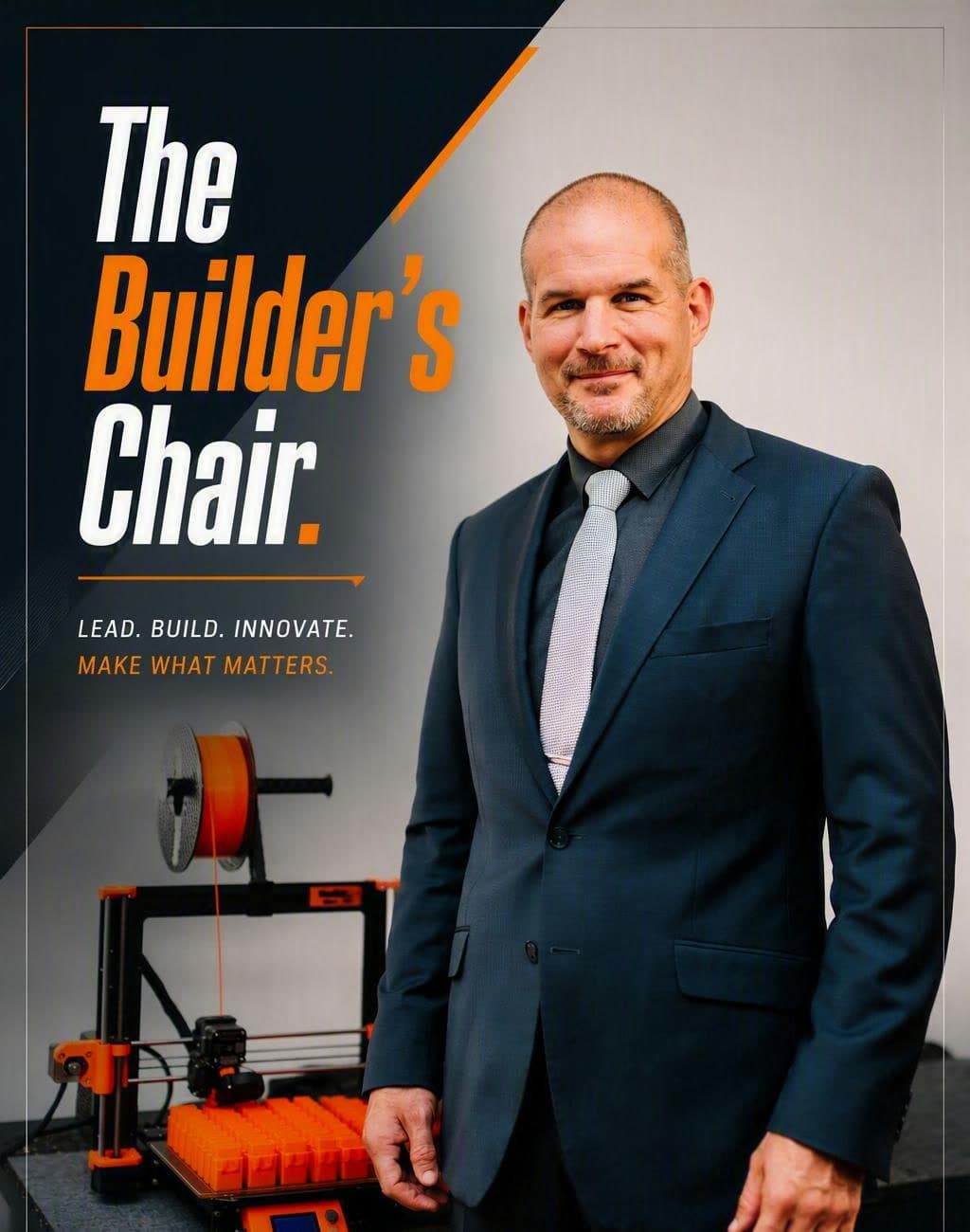
The Builder's Chair is Critical Ventures' founder interview series — conversations with the people building the companies in our portfolio. We go deep on the decisions that shaped the business, the hard years that didn't make the press release, and the bets they're making on the future of their industry.
Michal Ukropec is the co-founder and CEO of twinzo, a Bratislava-based industrial software company that gives manufacturers a live, walk-through 3D digital twin of their facility — accessible from a phone, tablet, or PC. The product grew out of an RTLS (real-time location system) project started in 2014 inside INFOTECH, a custom software house Michal founded in 1999. Whirlpool became the first major customer in 2017, and the platform was rebranded and relaunched as twinzo in 2019.
It took nine years of searching before twinzo closed its first outside investment: a €2.3 million round in 2023 led by Critical Ventures, alongside Venture to Future Fund, Soulmates Ventures, and DEPO Ventures. Today the roughly 14-person team counts Škoda Auto, Tatra Trucks, Whirlpool, Benteler, ABB, and Plastic Omnium among its customers, and is working toward US expansion.
Michal holds a Master's degree in Taxation from the University of Economics in Bratislava — an unusual academic background for someone who ended up building an industrial visualization platform. He's also a former Thai boxing champion, a marathon runner, and the #15 innovation influencer on LinkedIn worldwide with over 140,000 followers.
Critical Ventures backed twinzo because what convinced us wasn't the 3D visualisation itself, striking as it is, but the proprietary operational data running underneath it — the one asset, in our view, that the agentic-AI wave can't scrape, synthesise, or copy, and one that only becomes more valuable as the rest of software drifts toward generic.
You're a former Thai boxing champion and marathon runner who holds a Master's in Taxation — not the background you'd expect from someone who built a 3D visualization platform for factories. Has anything from that training turned out to be secretly useful running twinzo?
No — hahaha. At least not directly. Where tax and finance helped is a better understanding of money in business, a place where too many founders struggle. It's not that interesting to solve spreadsheets and argue with accountants when you can program and build something you love. But the paperwork has to be done, and understanding what and why in a broader context matters.
When people ask if I'm not afraid of public speaking, pitching to investors, negotiating with customers — Thai boxing comes into the game. I ask them: "Did someone beat you in front of a thousand people? No? Then you don't know what a rough experience is."
Competitive sport — and martial arts especially — has many parallels with business. Accounting helped me get things in order. Sport helped me survive things people say are impossible to survive.
It took nine years to find the right investor for twinzo, while you kept INFOTECH running the whole time. What's something about those unfunded years you wouldn't trade for a faster path?
I'm happy that INFOTECH is still running, even though now under new leadership — Peter has been with me for 11 years. We didn't want to close it. It's a highly profitable business.
We didn't seek an investor for those nine years. It took nine years to get to the moment when we said: OK, now we need one. We were able to finance twinzo on our own, but then we needed help and guidance. We hadn't built an international business yet.
I don't know if I would change anything. In the early years we developed many solutions, and only two survived. And still, after all these years, we are still ahead of the market. Would someone else have understood our vision in such an underdeveloped market? I don't know.
You've said you're 'always 10 years ahead of time, and that's actually a problem.' What are you building or believing right now that the market won't be ready for for another five to ten years?
First of all, I slowed down and moved more to the sales side of the business. If I were still more on the product side, twinzo would be even more advanced — but I'm not sure that would be beneficial for the business itself. I want to get back there one day.
In general, I still have my crazy ideas. People roll their eyes. It will wait for a while.
When we talk about twinzo's future, we are speaking broadly about moving toward an AI factory — a Dark Factory, if you want. But it is limited, at least for now, to a selected group of customers who are digitally ready for that kind of activity.
The founding spark was a chance question: your co-founder Jiří Žíla asked whether you could track people in real time for his catering business, and neither of you had a clue how at the time. How different did the actual product end up from what you first set out to prototype?
The funny thing is how good the first idea actually was. RTLS — real-time location system — is still our most important solution, and the natural foundation of the digital twin. We were able to bring together a unique combination of technologies that provides a very strong business case for our customers. ROI under a year.
The digital twin is a logical but unplanned outcome. I always wanted to build something like that — and by 'always,' I mean 35 years. Now that the technology is available and customers are getting ready, the show can begin. In the end it's much better developed, but not fundamentally different from what we originally imagined.
Your long-term target is 'dark factories' — plants run entirely by robots, lights off, zero people on the floor. What has to be true about twinzo's product before that's a realistic pitch rather than a slogan?
It's not so much about us as about the customer itself. The customer has to have this vision — and people able to deliver it on their end. And they are under pressure. The lack of people is a major issue. China understands that very well. What do they need all those humanoid robots for? With a fertility rate below 1.0, their demographic collapse is inevitable. The sooner companies understand and accept this, the sooner they'll move toward that kind of operation. The technology is here. It's a combination of technologies, not just one.
Your own investors say twinzo's real defensibility is the proprietary real-time operational data the platform generates — right as generic software gets commoditised by AI. Do most industrial companies already understand how valuable that live data is, or are they still treating it as a nice-to-have dashboard?
It's shifting to a much better understanding. A couple of years ago, manufacturers ignored it and relied mainly on planning. Now, with Asian competition much harder, they need to adapt much faster — and operational data is gaining importance. A dashboard no one can read? Their people don't need it. That's why they come to us.
The data infrastructure we provide takes them to the AI age. But there's a catch. When we talk to customers we consider very well prepared for AI, they don't trust the bold AI-related statements. They simply don't. The best ones test. They do small, simple PoCs. The even better ones develop their own tools for smaller problems. But when they hear 'AI will solve all your issues,' their reaction is: Stop. I don't have time for this.
So they feel the urgency to act — but they expect a reliable partner who won't promise a rosy future. They want strong evidence we can deliver: a big vision, achievable through small steps, and a genuine willingness to adapt to their specific situation. They don't want a generic solution. They don't believe one size fits all. Because right now, it can't be generic.
You've sold into manufacturers with very different digital maturity — from Whirlpool to Škoda Auto. What separates a manufacturer that's actually ready for a live digital twin from one that isn't yet?
It has nothing to do with their current digital maturity — that's the outcome, not the foundation. The foundation is company leadership that is highly supportive of digitization activities.
For a successful project, a customer needs three things: a vision, a champion, and money. Vision without a champion is only a nice dream. A champion without a vision from the highest management can't move things. And without resources, what can he really change?
In Slovak, we have a saying: "A fish rots from the head down." Everything begins at the top. You can see it perfectly in every project we run. It's not about the technology.