Strengthening Europe's Defense Manufacturing: Why Intralogistics Is the New Front Line
By Tomas Vojtek, Twinzo
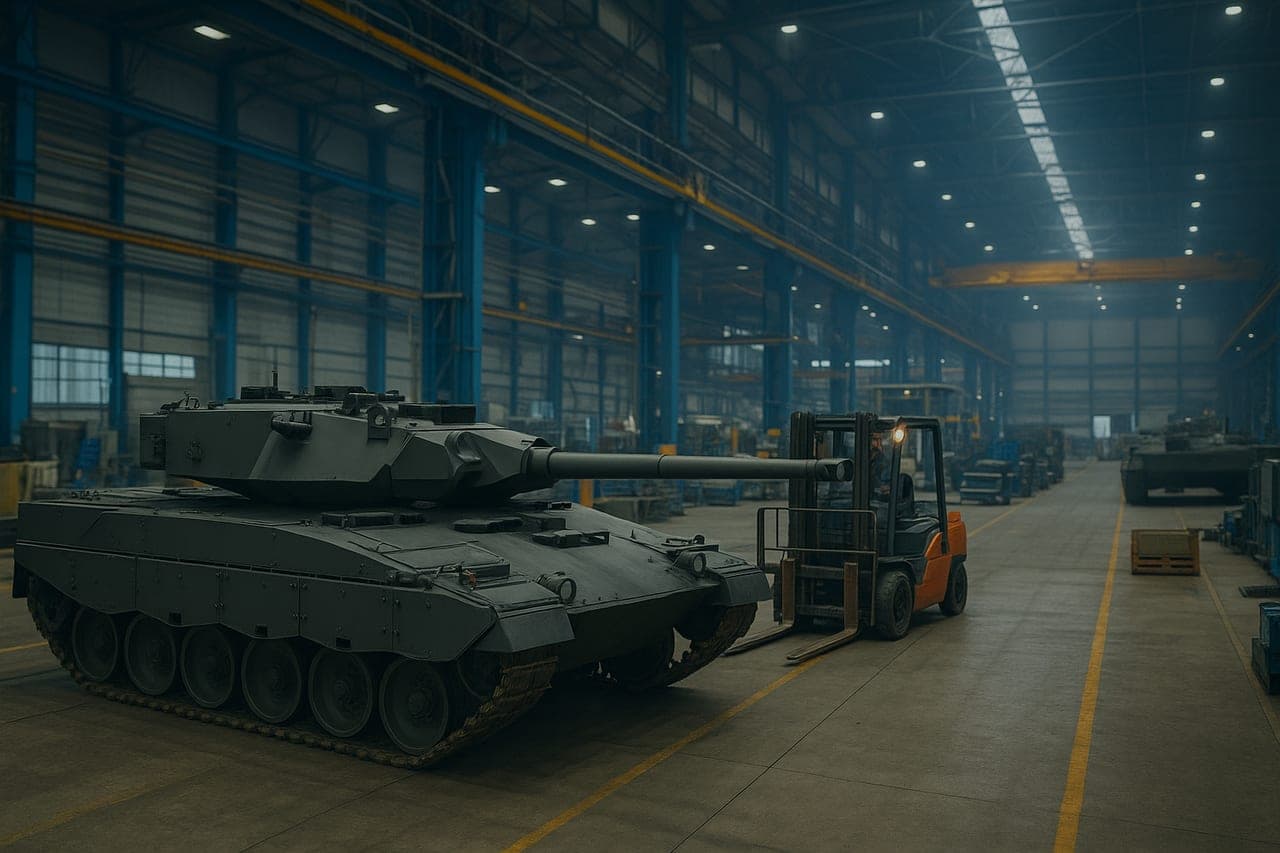
In an era of mounting geopolitical pressure and increasing defense budgets across Europe, the defense manufacturing sector finds itself under a new kind of scrutiny — not just for what it builds, but how efficiently it builds it. As nations accelerate rearmament programs and supply chains remain vulnerable, internal logistics has become a critical but often overlooked battlefield.
The war in Ukraine has reshaped European defense priorities. NATO members are ramping up production of ammunition, vehicles, and advanced systems at a pace not seen in decades. The European Defence Agency reports a record €52 billion in defense equipment spending in 2024, with a significant focus on accelerating domestic production capacities.
However, this surge is straining traditional production systems. Bottlenecks in internal logistics — slow material delivery, idle forklifts, and inefficient task coordination — are directly impacting output and delivery schedules. In defense manufacturing, where every minute counts and delays ripple across entire programs, operational efficiency is no longer optional.
Internal logistics is the circulatory system of a factory. It moves materials, components, and finished goods between stations, departments, and buildings. When intralogistics breaks down, production slows or stops — a risk the defense sector simply cannot afford amid tight delivery timelines and high-volume orders.
Yet many defense manufacturers still rely on outdated, manual, or semi-automated systems for internal material flow. These methods are slow to scale, prone to human error, and lack real-time visibility. That's where Twinzo steps in.
Twinzo is a real-time 3D digital twin platform that overlays live data onto existing 3D facility models. By integrating with RTLS (Real-Time Location Systems), ERP/MES systems, and IoT sensors, Twinzo transforms complex factories into live operational dashboards — accessible from any device.
In defense manufacturing, Twinzo delivers immediate benefits. Using RTLS-powered analytics, manufacturers can visualise and optimise forklift and tugger routes. One Tier 1 automotive supplier reduced fleet size from 36 to 20 forklifts and cut idle labour from 111 to 60 FTEs, saving nearly €1M annually — within just five months of implementation.
Twinzo's 'Uber-like' material order system dynamically assigns transport tasks based on production needs and driver availability. A white goods manufacturer using this system slashed daily idle time from 20 to under 2 minutes, saving over €5 million annually and boosting production by 5%.
Twinzo supports on-premises deployment — a crucial capability for defense contractors dealing with classified data, secure zones, or compliance-heavy environments. Supervisors, plant managers, and defense program leads can access a unified, real-time 3D overview of operations, identifying bottlenecks before they escalate — ideal for complex, high-mix defense production lines.
As Europe's defense sector expands capacity under urgent timelines, success will depend not just on engineering prowess but operational agility. Twinzo equips manufacturers with a spatial, real-time layer of intelligence that enables faster decisions, optimised labour use, and resilience in a volatile supply chain landscape.
In short: defense readiness starts inside the factory walls. And intralogistics — powered by Twinzo — might just be the most strategic upgrade of all.